
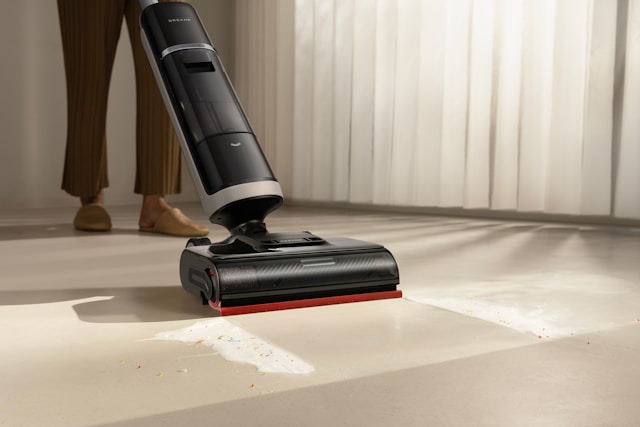
In the realm of facility management and commercial cleaning, the choice of floor maintenance equipment directly impacts operational efficiency, cost control, and overall productivity. As technology advances, the debate between autonomous cleaning systems and traditional manual or semi-automated floor scrubbers has gained significant traction among facility managers, cleaning contractors, and business owners. While traditional floor scrubbers have long been the cornerstone of industrial and commercial cleaning operations, the emergence of autonomous floor scrubber solutions promises to redefine industry standards through innovation and efficiency. This analysis aims to conduct a comprehensive cost-benefit evaluation of both options, examining key factors such as initial investment, operational expenses, labor requirements, performance outcomes, and long-term value. By dissecting these critical elements, decision-makers can gain actionable insights to determine which solution aligns best with their specific operational needs, budget constraints, and strategic goals.
1. Initial Investment Comparison
1.1 Cost Structure of Traditional Floor Scrubbers
Traditional floor scrubbers, ranging from walk-behind models to ride-on units, typically feature a more straightforward cost structure at the point of purchase. These machines rely on mechanical components and manual operation, which translates to lower research and development costs compared to their autonomous counterparts. The initial investment for a traditional floor scrubber varies based on size, capacity, and brand, with entry-level walk-behind models accessible at relatively modest price points. However, it is important to note that larger, high-capacity traditional scrubbers designed for industrial settings can still require a substantial upfront expenditure, especially when equipped with advanced cleaning features.
1.2 Cost Structure of Autonomous Cleaning Systems
The autonomous floor scrubber represents a significant technological advancement, and its initial investment reflects the integration of cutting-edge sensors, artificial intelligence, and automation systems. These machines are engineered to operate independently, navigating complex environments, avoiding obstacles, and optimizing cleaning paths without human intervention. As a result, the upfront cost of this autonomous solution is generally higher than that of a comparable traditional model. The premium pricing stems from the development and integration of sophisticated navigation technologies, software systems, and durable hardware designed to withstand continuous, unattended operation. However, it is essential to view this initial investment in the context of long-term operational savings and efficiency gains, which often offset the higher upfront cost over the equipment’s lifecycle.
2. Operational Cost Analysis
2.1 Labor Costs: A Defining Factor
Labor is one of the most significant operational expenses in commercial cleaning—an area where autonomous cleaning technology delivers a transformative advantage. Traditional floor scrubbers require dedicated operators to maneuver the machine, monitor performance, and adjust settings as needed. This reliance on human labor not only increases payroll costs but also introduces variables such as operator fatigue, inconsistent cleaning quality, and the need for training and supervision. In contrast, the autonomous floor scrubber operates independently, eliminating the need for a full-time operator. Once programmed, the machine can work continuously, covering large areas without breaks, and requires minimal human oversight—typically limited to refilling cleaning solutions, emptying waste tanks, and performing routine maintenance. This reduction in labor requirements translates to substantial cost savings over time, especially for facilities with extensive floor space or round-the-clock cleaning needs.
2.2 Maintenance and Consumable Costs
Both traditional and autonomous floor scrubbers incur maintenance and consumable costs, but the nature and magnitude of these expenses differ significantly. Traditional floor scrubbers have simpler mechanical systems, which can make routine maintenance more straightforward and less costly in some cases. However, the frequent use of manual operation can lead to increased wear and tear on components such as brushes, squeegees, and drive systems, as operators may maneuver the machine aggressively or in ways that strain mechanical parts. Additionally, traditional models may require more frequent adjustments and repairs due to human error or inconsistent operation.
Autonomous cleaning systems, while featuring more complex technology, are designed for precision and efficiency, which can reduce unnecessary wear and tear. The machine’s automated navigation system ensures consistent movement patterns, avoiding abrupt turns or collisions that could damage components. Furthermore, many autonomous models are equipped with self-diagnostic systems that monitor performance and alert maintenance teams to potential issues before they escalate into costly repairs. Consumable costs, such as cleaning solutions and replacement brushes, are relatively similar for both types of machines, but the autonomous model’s optimized cleaning paths can reduce waste by ensuring that cleaning agents are used only where needed, minimizing overconsumption.
2.3 Energy Efficiency
Energy consumption is another critical component of operational costs. Traditional floor scrubbers, particularly older models, may be less energy-efficient, relying on gasoline engines or inefficient electric motors that consume significant power. In contrast, modern autonomous cleaning systems are engineered with energy efficiency in mind, utilizing advanced electric motors, lithium-ion batteries, and intelligent power management systems. These features allow the autonomous machine to operate for longer periods on a single charge, reducing the frequency of recharging and lowering overall energy costs. Additionally, the optimized cleaning paths of autonomous solutions minimize redundant cleaning, further reducing energy consumption compared to traditional models, which may cover the same area multiple times due to operator error or inconsistent navigation.
3. Performance and Productivity Evaluation
3.1 Cleaning Quality and Consistency
Cleaning quality is a non-negotiable requirement for any facility, and both autonomous and traditional floor scrubbers are capable of delivering satisfactory results when used correctly. However, autonomous systems offer a distinct advantage in terms of consistency. Traditional scrubbers rely heavily on the skill and attention of the operator; an inexperienced or inattentive operator may miss spots, apply inconsistent pressure, or fail to follow optimal cleaning patterns, leading to uneven results. The autonomous floor scrubber, by contrast, follows pre-programmed cleaning paths with precision, ensuring that every inch of the floor is cleaned thoroughly and uniformly. The machine’s sensors and AI technology allow it to adapt to different floor surfaces and adjust cleaning parameters—such as brush pressure and solution flow—automatically, delivering consistent, high-quality results regardless of the environment.
3.2 Productivity and Coverage Capacity
Productivity is a key metric for evaluating floor scrubbers, especially in large facilities such as warehouses, airports, shopping malls, and manufacturing plants. Traditional floor scrubbers are limited by the speed and endurance of the operator; even the most efficient operator will need breaks, and fatigue can slow down cleaning speed over time. Autonomous cleaning systems eliminate these limitations, operating at a consistent speed for extended periods without interruption. Many models can clean thousands of square feet per hour, and some are capable of 24/7 operation with minimal downtime for recharging or maintenance. Additionally, autonomous machines can be programmed to clean during off-peak hours, such as nights or weekends, avoiding disruption to daily operations and maximizing productivity. This ability to clean efficiently without interfering with business activities is a significant advantage for facilities that require continuous operation.
4. Long-Term Value and Return on Investment (ROI)
4.1 Calculating ROI for Traditional Floor Scrubbers
The return on investment for traditional floor scrubbers is primarily driven by their lower initial cost. For small facilities with limited floor space and minimal labor costs, a traditional model may offer a faster short-term ROI. However, over the long term, the ongoing labor costs and potential for increased maintenance expenses can erode profitability. Additionally, traditional floor scrubbers have a shorter lifecycle on average, as the wear and tear from manual operation can reduce their operational lifespan. This means that facility managers may need to replace traditional scrubbers more frequently, leading to repeated upfront investments.
4.2 Calculating ROI for Autonomous Systems
While the autonomous floor scrubber requires a higher initial investment, its long-term ROI is often superior due to significant labor savings, reduced maintenance costs, and extended operational lifespan. The elimination of full-time operator costs alone can result in substantial savings within the first year of operation, and these savings compound over time. Additionally, the autonomous machine’s precision and efficiency reduce the need for rework, further lowering operational costs. Many facilities report that this advanced cleaning solution pays for itself within 18 to 36 months, and its longer lifecycle—often 5 to 7 years or more—ensures sustained value beyond the break-even point. Furthermore, as labor costs continue to rise, the savings delivered by autonomous technology will only increase, making it a more sustainable and cost-effective solution in the long run.
5. Adaptability and Future-Proofing
5.1 Flexibility in Diverse Environments
Modern facilities come in a wide range of sizes and layouts, from open warehouses to complex office buildings with narrow corridors and obstacles. Traditional floor scrubbers can be challenging to operate in tight or complex spaces, requiring skilled operators to navigate around furniture, equipment, and other obstacles. Autonomous cleaning systems, equipped with advanced sensors and mapping technology, excel in diverse environments. They can create detailed floor plans, identify obstacles in real-time, and adjust their path accordingly, ensuring thorough cleaning even in hard-to-reach areas. This adaptability makes the autonomous floor scrubber suitable for a wide range of facilities, from small retail stores to large industrial complexes, without the need for extensive operator training or adjustments.
5.2 Technological Advancements and Scalability
The field of autonomous cleaning technology is evolving rapidly, and modern autonomous systems are designed to keep pace with these advancements. Many models offer over-the-air software updates, allowing facility managers to add new features, improve navigation algorithms, and enhance performance without purchasing new equipment. This scalability ensures that autonomous solutions remain relevant and efficient, even as operational needs change or new technologies emerge. Traditional floor scrubbers, by contrast, are limited by their mechanical design and lack the ability to integrate new technologies, making them more likely to become obsolete as industry standards evolve. For businesses looking to future-proof their operations, the autonomous floor scrubber represents a strategic investment that can adapt to changing demands and technological advancements.
The comparison between autonomous and traditional floor scrubbers reveals a clear trade-off between initial investment and long-term value. Traditional floor scrubbers offer a lower upfront cost and simplicity, making them a viable option for small facilities with limited budgets and straightforward cleaning needs. However, their reliance on human labor, higher operational costs, and limited adaptability make them less sustainable in the long run, especially as labor costs rise and facility requirements become more complex.
The autonomous floor scrubber, despite its higher initial investment, delivers compelling advantages that justify the premium over time. Its ability to eliminate full-time operator costs, reduce maintenance expenses, improve cleaning consistency, and enhance productivity translates to significant long-term savings and a superior return on investment. Additionally, the autonomous system’s adaptability to diverse environments and compatibility with future technological advancements make it a future-proof solution for facilities looking to optimize their cleaning operations and reduce operational risks.
For decision-makers, the choice between autonomous and traditional floor scrubbers ultimately depends on their specific operational needs, budget constraints, and long-term strategic goals. However, for facilities seeking to improve efficiency, reduce costs, and enhance cleaning quality, the autonomous floor scrubber emerges as a clear and compelling choice. As technology continues to advance and the cost of autonomous systems becomes more accessible, it is likely that this innovative cleaning solution will become the new standard in commercial and industrial floor maintenance, revolutionizing the way facilities are cleaned and managed.
Leave a Reply